
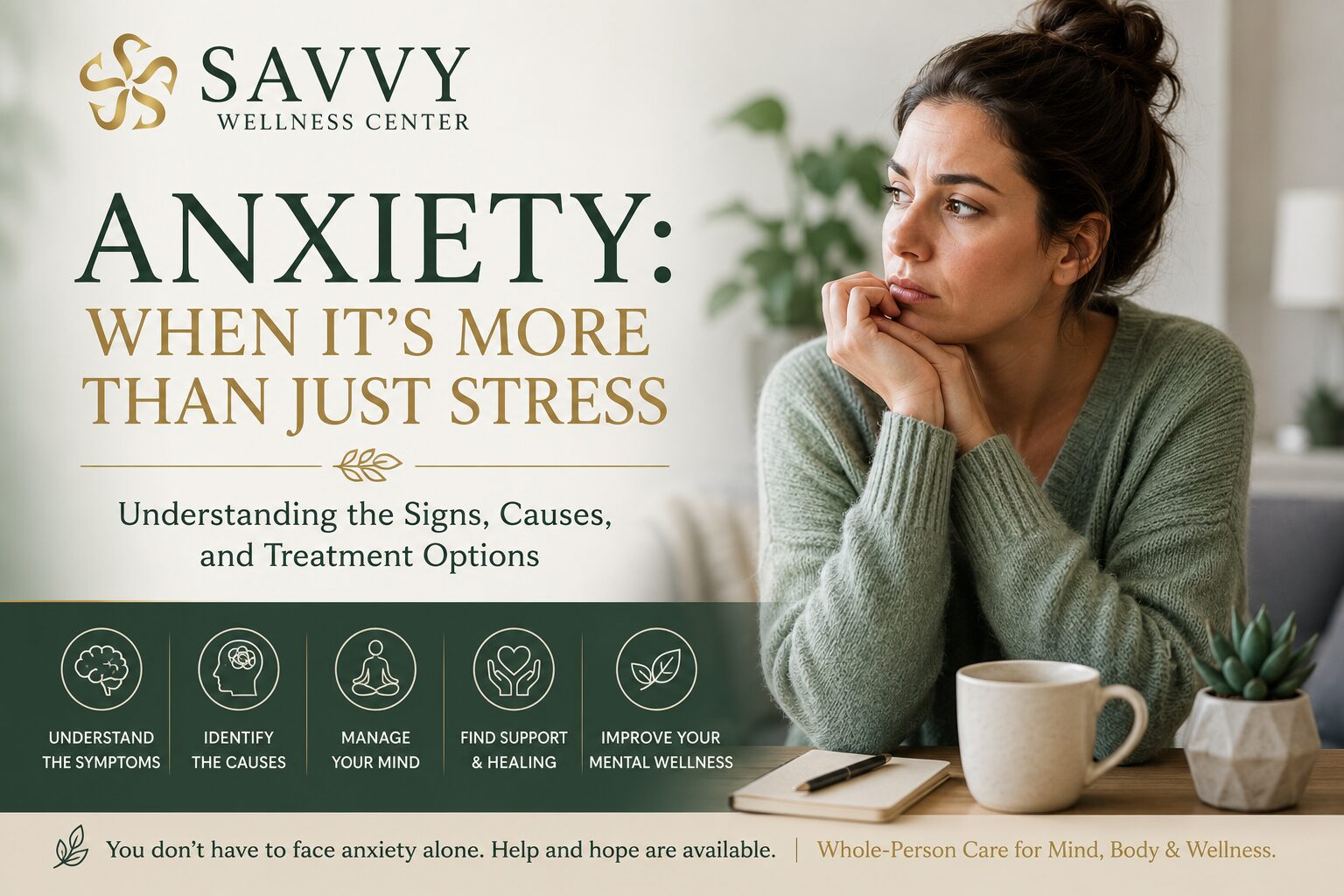
Everyone experiences stress from time to time. A busy work schedule, family responsibilities, financial concerns, or major life changes can all create feelings of worry or overwhelm. In many cases, those feelings improve once the stressful situation passes.
But what happens when the worry doesn’t go away?
If anxious thoughts become persistent, difficult to control, or begin interfering with your daily life, it may be more than everyday stress. Anxiety disorders are among the most common mental health conditions, affecting millions of people each year. Fortunately, anxiety is treatable, and with the right support, many people experience significant improvement in their symptoms and overall quality of life.
At Savvy Wellness Center, we believe mental health is an essential part of whole-person wellness. Our goal is to help patients understand the factors that may contribute to anxiety and provide personalized care that supports both mental and physical well-being.
What Is Anxiety?
Anxiety is your body’s natural response to perceived danger or uncertainty. It prepares you to react quickly during challenging situations by increasing alertness and focus.
Occasional anxiety is normal and can even be helpful.
However, when anxiety becomes excessive, persistent, or occurs without a clear cause, it may indicate an anxiety disorder that deserves professional evaluation.
Stress vs. Anxiety
Although stress and anxiety are closely related, they are not the same.
Stress
Stress is usually triggered by an identifiable situation, such as:
- Work deadlines
- Financial challenges
- Relationship conflicts
- Major life changes
- Health concerns
Stress often improves once the situation resolves.
Anxiety
Anxiety may continue even after the stressful event has passed or may occur without an obvious trigger.
It often involves ongoing worry, fear, or nervousness that can interfere with work, relationships, sleep, and daily activities.
Common Signs and Symptoms of Anxiety
Anxiety affects people differently, but common symptoms include:
Emotional Symptoms
- Excessive worrying
- Feeling nervous or on edge
- Irritability
- Difficulty relaxing
- Feeling overwhelmed
- Fear that something bad will happen
Physical Symptoms
- Rapid heartbeat
- Shortness of breath
- Muscle tension
- Headaches
- Sweating
- Trembling
- Dizziness
- Upset stomach
- Fatigue
Cognitive Symptoms
- Difficulty concentrating
- Racing thoughts
- Trouble making decisions
- Feeling mentally exhausted
Behavioral Symptoms
- Avoiding certain situations
- Withdrawing from friends or family
- Difficulty sleeping
- Changes in eating habits
Because these symptoms can also occur with certain medical conditions, it’s important to receive a proper evaluation.
What Causes Anxiety?
There isn’t one single cause.
Instead, anxiety often develops from a combination of factors, including:
- Genetics
- Brain chemistry
- Chronic stress
- Trauma
- Hormonal changes
- Certain medical conditions
- Poor sleep
- Caffeine or stimulant use
- Major life transitions
For many people, several factors work together to contribute to symptoms.
How Physical Health Affects Mental Health
Mental and physical health are deeply connected.
Sometimes physical conditions can contribute to anxiety-like symptoms.
Healthcare providers may evaluate factors such as:
- Thyroid disorders
- Vitamin deficiencies
- Hormone imbalances
- Blood sugar fluctuations
- Sleep disorders
- Chronic inflammation
- Certain medications
Addressing underlying health concerns may be an important part of a comprehensive treatment plan.
How Anxiety Is Diagnosed
Diagnosis begins with a thorough evaluation that includes:
- Review of symptoms
- Medical history
- Mental health history
- Physical examination
- Medication review
- Laboratory testing when appropriate
Your healthcare provider may also recommend additional mental health assessments to better understand your symptoms.
Treatment Options
Treatment depends on your individual symptoms, medical history, and overall health.
Many people benefit from a combination of approaches.
Lifestyle Changes
Healthy habits can support mental wellness.
Examples include:
- Regular exercise
- Nutritious eating
- Consistent sleep schedule
- Limiting caffeine
- Reducing alcohol intake
- Spending time outdoors
Stress Management
Learning healthy coping strategies may help reduce anxiety.
Examples include:
- Deep breathing
- Meditation
- Mindfulness
- Journaling
- Yoga
- Relaxation techniques
Counseling and Therapy
Psychotherapy, including Cognitive Behavioral Therapy (CBT), is one of the most effective treatments for anxiety disorders.
Therapy helps individuals identify unhelpful thought patterns, develop healthy coping skills, and improve emotional resilience.
Medication
Some individuals benefit from prescription medications that help manage anxiety symptoms.
Medication decisions should always be made with a qualified healthcare provider based on your individual needs.
Functional Medicine Approach
Functional medicine recognizes that mental health is influenced by many aspects of overall wellness.
Depending on your symptoms, your provider may recommend:
- Comprehensive health evaluation
- Laboratory testing
- Hormone assessment
- Nutritional evaluation
- Lifestyle counseling
- Sleep optimization
- Stress management strategies
This whole-person approach supports both mental and physical health.
When Should You Seek Help?
You should consider speaking with a healthcare professional if anxiety:
- Lasts for several weeks or longer
- Interferes with work or school
- Affects relationships
- Disrupts sleep
- Causes panic attacks
- Makes daily activities difficult
- Leads you to avoid situations you once enjoyed
Seeking help early often leads to better outcomes.
Frequently Asked Questions
Is anxiety a normal part of life?
Yes. Everyone experiences anxiety occasionally. It becomes a concern when it is persistent, overwhelming, or interferes with daily life.
Can anxiety cause physical symptoms?
Yes. Anxiety can contribute to symptoms such as muscle tension, headaches, stomach discomfort, rapid heartbeat, dizziness, and fatigue.
Can lifestyle changes help anxiety?
Healthy sleep, exercise, balanced nutrition, stress management, and limiting caffeine may help improve symptoms for some individuals.
Can anxiety be treated?
Yes. Many people experience significant improvement through therapy, healthy lifestyle changes, medication when appropriate, or a combination of treatments.
When should I see a healthcare provider?
If anxiety is persistent, worsening, or affecting your quality of life, it’s important to seek professional evaluation.
Key Takeaways
- Anxiety is more than everyday stress when it becomes persistent, excessive, or begins interfering with daily life.
- Symptoms may include excessive worry, racing thoughts, muscle tension, sleep problems, rapid heartbeat, and difficulty concentrating.
- Anxiety often results from a combination of psychological, biological, and lifestyle factors.
- Treatment may include therapy, healthy lifestyle changes, stress management, medication, and evaluation for underlying medical conditions.
- Early evaluation and personalized care can help improve symptoms and support long-term mental wellness.
Take the First Step Toward Better Mental Health
Living with anxiety can feel overwhelming, but you don’t have to face it alone. Understanding the factors contributing to your symptoms is an important first step toward healing and improved well-being.
At Savvy Wellness Center, we take a compassionate, whole-person approach to mental health. By considering your physical health, lifestyle, emotional well-being, and medical history, we work with you to create a personalized care plan that supports lasting wellness.
If anxiety is affecting your daily life, schedule a consultation with Savvy Wellness Center today. Together, we can help you find answers, develop healthy coping strategies, and support your journey toward greater peace of mind and overall well-being.