
Mental health is complex. Conditions such as anxiety, depression, chronic stress, and mood disorders rarely have a single cause. Emotional well-being is influenced by psychological, biological, lifestyle, and environmental factors that often work together.
For many people, the most effective approach isn’t choosing between therapy or medical care—it’s combining both.
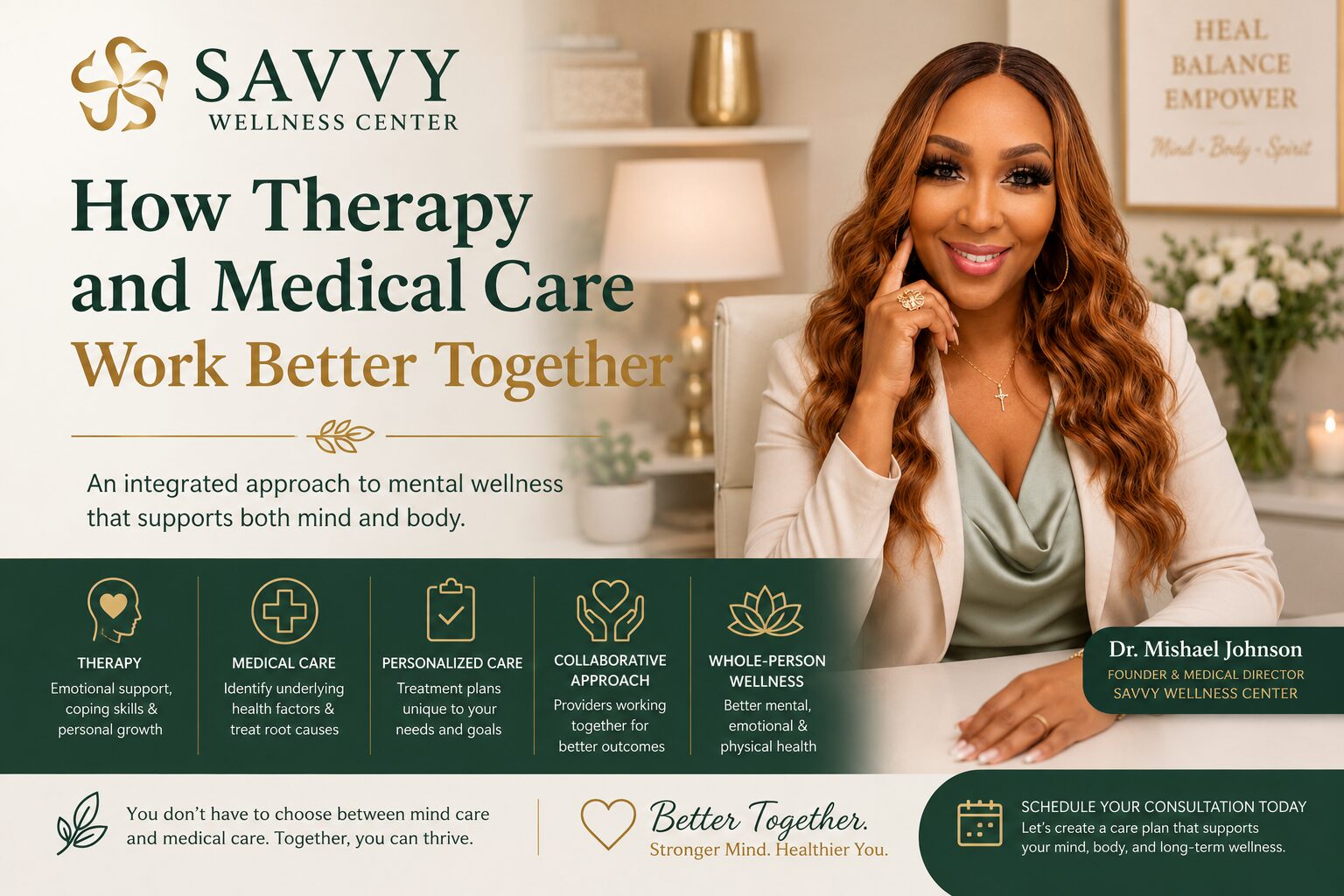
Therapy helps individuals develop healthy coping skills, process emotions, and improve thought patterns, while medical care evaluates physical health, identifies underlying medical conditions, and provides treatment when appropriate. Together, these approaches create a more comprehensive plan for long-term wellness.
At Savvy Wellness Center, we believe caring for both the mind and body leads to better outcomes. Our whole-person approach supports patients by integrating medical evaluation with mental health resources whenever appropriate.
Understanding Whole-Person Care
Whole-person care recognizes that physical and mental health are deeply connected.
For example:
- Chronic stress can affect blood pressure and hormone levels.
- Poor sleep can contribute to anxiety and depression.
- Thyroid disorders may cause symptoms similar to depression.
- Hormonal changes can affect mood and emotional regulation.
- Chronic illness may increase emotional stress.
Addressing only one aspect of health may leave important contributing factors unrecognized.
What Does Therapy Do?
Therapy provides a safe, supportive environment where individuals can better understand their thoughts, emotions, and behaviors.
Licensed mental health professionals help patients:
- Manage anxiety
- Reduce symptoms of depression
- Improve communication skills
- Develop healthy coping strategies
- Process grief and trauma
- Build emotional resilience
- Strengthen relationships
- Improve self-confidence
One of the most effective evidence-based approaches is Cognitive Behavioral Therapy (CBT), which helps individuals recognize and change unhelpful thought patterns that contribute to emotional distress.
Therapy is not about “fixing” someone—it is about providing tools, guidance, and support for long-term emotional health.
The Role of Medical Care
Medical providers evaluate physical health factors that may affect mental wellness.
A comprehensive medical evaluation may include:
- Medical history
- Physical examination
- Medication review
- Laboratory testing
- Thyroid evaluation
- Hormone assessment when appropriate
- Nutritional evaluation
- Sleep assessment
Sometimes symptoms that appear psychological may actually be influenced by medical conditions.
Examples include:
- Thyroid disorders
- Vitamin B12 deficiency
- Vitamin D deficiency
- Iron deficiency
- Hormonal imbalances
- Sleep disorders
- Blood sugar fluctuations
- Chronic inflammation
Identifying these issues helps create a more complete treatment plan.
Why Combining Therapy and Medical Care Matters
When therapy and medical care work together, patients benefit from a more comprehensive understanding of their health.
An integrated approach may help:
- Address both emotional and physical contributors to symptoms.
- Improve communication between healthcare providers.
- Create personalized treatment plans.
- Improve symptom management.
- Support long-term recovery.
- Promote better overall quality of life.
Rather than focusing on one piece of the puzzle, this approach considers the entire person.
Functional Medicine’s Role in Mental Wellness
Functional medicine complements conventional mental healthcare by exploring factors that influence overall wellness.
These may include:
Nutrition
The brain relies on adequate nutrients to function properly.
A balanced diet supports:
- Brain health
- Energy production
- Cognitive function
- Overall wellness
Sleep
Quality sleep plays an essential role in emotional regulation.
Poor sleep may contribute to:
- Anxiety
- Depression
- Irritability
- Fatigue
- Difficulty concentrating
Improving sleep habits often benefits both physical and mental health.
Hormone Balance
Hormonal changes may influence:
- Mood
- Energy
- Motivation
- Emotional regulation
- Stress response
Hormone evaluation may be appropriate when symptoms suggest an underlying imbalance.
Stress Management
Learning healthy coping strategies may help reduce chronic stress.
Examples include:
- Mindfulness
- Meditation
- Breathing exercises
- Physical activity
- Relaxation techniques
Lifestyle Medicine
Healthy daily habits support overall mental wellness.
Recommendations may include:
- Regular exercise
- Balanced nutrition
- Limiting alcohol
- Reducing excessive caffeine
- Building healthy social connections
When Medication May Be Helpful
Some individuals benefit from prescription medications as part of their treatment plan.
Medication may help reduce symptoms while individuals continue working on long-term coping skills through therapy.
Medication decisions should always be made collaboratively with a qualified healthcare provider based on individual needs, medical history, and treatment goals.
Building Your Personalized Care Plan
No two people experience anxiety, depression, or stress in exactly the same way.
Your personalized treatment plan may include:
- Medical evaluation
- Therapy or counseling
- Lifestyle modifications
- Nutrition guidance
- Stress management
- Sleep improvement
- Laboratory testing when appropriate
- Medication if clinically indicated
- Ongoing follow-up and monitoring
The goal is not simply symptom relief but improved overall well-being.
Benefits of an Integrated Approach
Patients often appreciate a collaborative care model because it can:
- Improve communication between providers
- Address underlying health concerns
- Encourage healthier lifestyle habits
- Support emotional resilience
- Improve overall wellness
- Promote long-term mental health
Working together allows healthcare providers to better understand the full picture of a patient’s health.
Who Can Benefit?
An integrated approach may be beneficial for individuals experiencing:
- Anxiety
- Depression
- Chronic stress
- Burnout
- Mood changes
- Persistent fatigue
- Brain fog
- Sleep disturbances
- Hormonal changes affecting mood
A healthcare provider can help determine which services are appropriate based on your symptoms and health history.
Frequently Asked Questions
Do I need both therapy and medical care?
Not everyone does. Some individuals benefit from therapy alone, while others may benefit from medical evaluation, medication, or a combination of treatments. Your healthcare provider can recommend the best approach for your individual needs.
Can physical health affect mental health?
Yes. Hormones, thyroid function, sleep quality, nutrition, chronic illness, and other medical conditions can all influence emotional well-being.
Is therapy only for people with severe mental illness?
No. Therapy can benefit anyone experiencing stress, anxiety, relationship challenges, grief, or life transitions, as well as those living with diagnosed mental health conditions.
Does taking medication mean therapy isn’t necessary?
Not necessarily. Medication and therapy often work well together. While medication may help manage symptoms, therapy provides tools to address thought patterns, behaviors, and coping skills.
Can lifestyle changes improve mental health?
Healthy nutrition, regular exercise, quality sleep, stress management, and social support can all contribute to improved mental wellness as part of a comprehensive treatment plan.
Key Takeaways
- Therapy and medical care often work best together because they address both the emotional and physical aspects of mental health.
- Comprehensive medical evaluations can identify underlying conditions such as hormone imbalances, thyroid disorders, nutritional deficiencies, or sleep problems that may contribute to emotional symptoms.
- Therapy provides valuable coping skills, emotional support, and evidence-based strategies for managing anxiety, depression, stress, and life challenges.
- A whole-person approach combines medical care, therapy, healthy lifestyle habits, and personalized treatment plans to support long-term wellness.
- Collaborative care helps patients achieve better overall mental, emotional, and physical health.
Your Mental Health Deserves Comprehensive Care
You don’t have to choose between caring for your mind or your body—they work together, and your healthcare should reflect that. Whether you’re experiencing anxiety, depression, chronic stress, or emotional exhaustion, a comprehensive approach can help uncover the factors contributing to your symptoms and provide the support you need to move forward.
At Savvy Wellness Center, we believe that the best outcomes come from treating the whole person. Through comprehensive medical evaluations, lifestyle medicine, functional health assessments, and collaboration with mental health professionals, we create personalized care plans designed to support lasting wellness.
Schedule a consultation with Savvy Wellness Center today to learn how an integrated approach to therapy and medical care can help you achieve better mental, emotional, and physical health—because lasting wellness begins with caring for the whole you.