
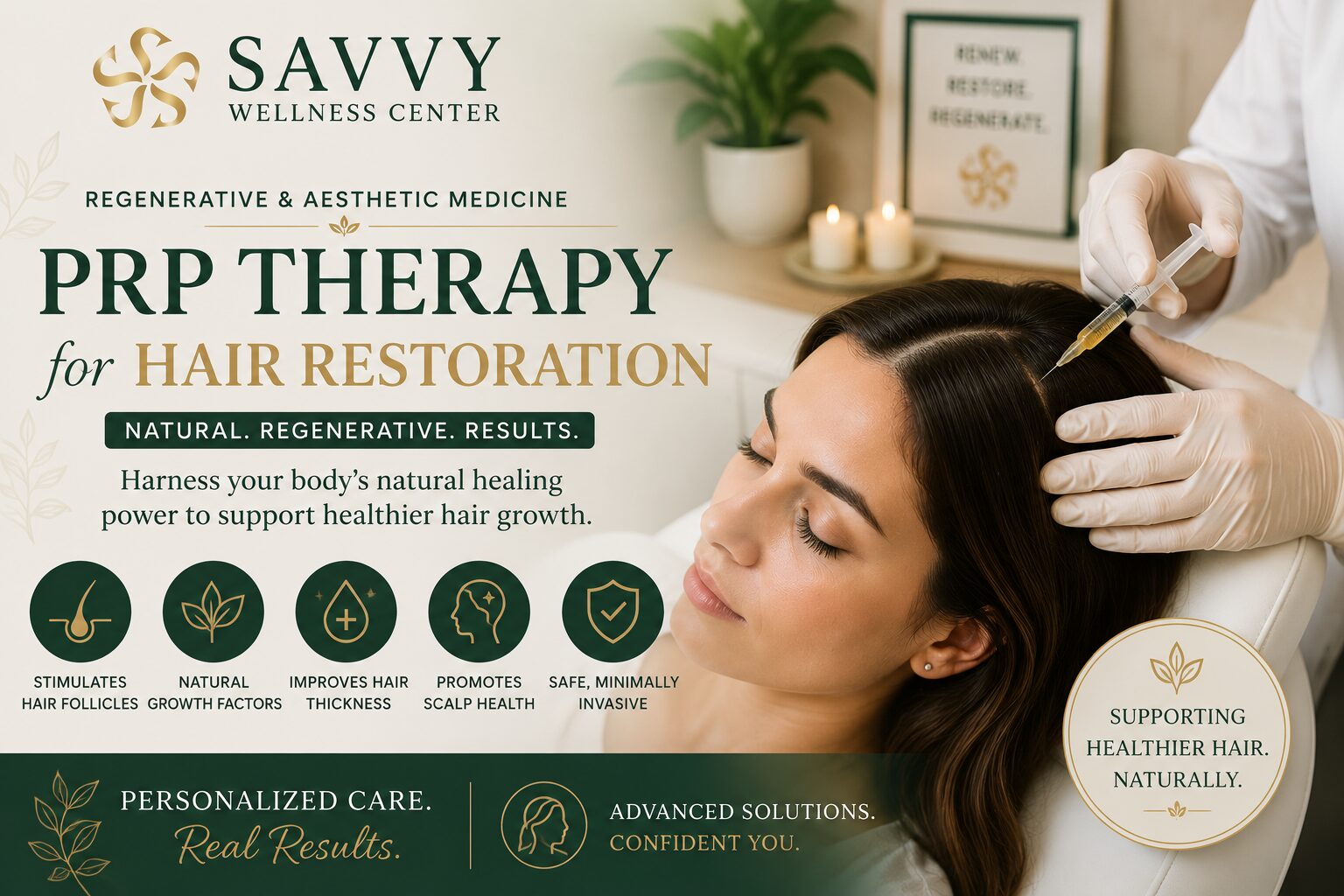
Hair loss and thinning can affect both men and women, often impacting confidence and self-esteem. While shedding some hair each day is a normal part of the hair growth cycle, noticeable thinning or increased hair loss may indicate an underlying issue that deserves medical attention.
Advances in regenerative medicine have introduced innovative, minimally invasive options for supporting hair restoration. One of the most popular treatments is Platelet-Rich Plasma (PRP) therapy, which uses components of your own blood to support the body’s natural healing processes.
At Savvy Wellness Center, we take a personalized approach to hair restoration by evaluating potential underlying causes of hair loss and developing individualized treatment plans that align with your health goals.
What Is PRP Therapy?
Platelet-Rich Plasma (PRP) therapy is a regenerative medicine treatment that uses a concentrated portion of your own blood, rich in platelets and naturally occurring growth factors.
Platelets are best known for helping blood clot after an injury, but they also contain proteins and growth factors involved in tissue repair and healing. In PRP therapy, these platelets are concentrated and injected into targeted areas of the scalp to support the body’s natural regenerative processes.
Because PRP is created from your own blood, there is a low risk of allergic reaction or rejection.
How Does PRP Hair Restoration Work?
A PRP treatment generally includes the following steps:
Step 1: Blood Collection
A small sample of blood is drawn from your arm, similar to a routine blood test.
Step 2: Platelet Separation
The blood sample is placed into a centrifuge, which separates the platelet-rich plasma from other blood components.
Step 3: Scalp Preparation
Your healthcare provider evaluates the treatment areas and prepares the scalp. A topical numbing agent may be used to improve comfort.
Step 4: PRP Injection
The concentrated platelet-rich plasma is carefully injected into areas of the scalp experiencing thinning hair.
The entire procedure typically takes about 45 to 60 minutes.
How PRP May Support Hair Restoration
Researchers believe the growth factors contained within platelets may help support the natural function of hair follicles.
PRP therapy may help:
- Support healthier hair follicles
- Encourage the normal hair growth cycle
- Improve hair thickness
- Promote scalp health
- Support healthier-looking hair
Results vary from person to person, and ongoing research continues to evaluate PRP’s role in hair restoration.
Who May Be a Good Candidate?
PRP therapy may be appropriate for individuals experiencing:
- Early-stage hair thinning
- Male pattern hair loss
- Female pattern hair loss
- Mild to moderate hair loss
- Hair thinning associated with aging
Your healthcare provider will perform a comprehensive evaluation to determine whether PRP therapy is appropriate for your individual needs.
Understanding the Causes of Hair Loss
Hair loss may result from many different factors, including:
- Genetics
- Aging
- Hormonal changes
- Stress
- Nutritional deficiencies
- Thyroid disorders
- Certain medications
- Autoimmune conditions
- Medical illnesses
Because treatment depends on the underlying cause, identifying why hair loss is occurring is an important part of your evaluation.
Benefits of PRP Therapy
Many patients choose PRP because it offers several potential advantages.
Uses Your Own Blood
Since PRP is prepared from your own blood, there is minimal risk of allergic reactions.
Minimally Invasive
PRP therapy involves injections rather than surgery, with little downtime for most patients.
Supports Natural Healing
Rather than introducing synthetic materials, PRP uses your body’s own platelets and growth factors to support natural regenerative processes.
Little Recovery Time
Most patients return to normal daily activities shortly after treatment.
Your provider may recommend avoiding strenuous exercise or hair treatments for a short period following the procedure.
What Results Can You Expect?
Hair restoration is gradual.
Because hair naturally grows in cycles, visible improvements may take several months.
Some individuals notice:
- Reduced hair shedding
- Fuller-looking hair
- Improved hair thickness
- Healthier scalp appearance
Individual results vary depending on age, genetics, overall health, and the underlying cause of hair loss.
How Many Treatments Are Needed?
Treatment recommendations vary for each patient.
Many providers recommend an initial series of treatments followed by maintenance sessions when appropriate.
Your personalized treatment plan will depend on:
- Your degree of hair loss
- Overall scalp health
- Treatment goals
- Response to therapy
Is PRP Therapy Safe?
When performed by qualified healthcare professionals, PRP therapy is generally considered safe for appropriate candidates.
Potential temporary side effects may include:
- Mild tenderness
- Redness
- Swelling
- Minor bruising
- Temporary discomfort at the injection sites
Because PRP uses your own blood, the risk of allergic reaction is low.
Frequently Asked Questions
Is PRP therapy painful?
Most patients describe the treatment as causing only mild discomfort. A topical numbing cream may be used to improve comfort during the procedure.
When will I see results?
Hair growth is gradual. Many individuals begin noticing changes several months after treatment, although results vary.
Is PRP therapy permanent?
PRP does not permanently stop hair loss. Some patients may benefit from maintenance treatments depending on their individual needs.
Can PRP treat all types of hair loss?
No. PRP may not be appropriate for every cause of hair loss. A medical evaluation helps determine whether it is a suitable treatment option.
Can PRP be combined with other treatments?
Yes. Depending on your individual needs, your provider may recommend combining PRP with other evidence-based hair restoration therapies.
Key Takeaways
- PRP therapy is a regenerative medicine treatment that uses platelet-rich plasma derived from your own blood.
- The growth factors contained in PRP may help support healthier hair follicles and promote the body’s natural hair growth processes.
- PRP therapy may be appropriate for individuals experiencing early-stage hair thinning or pattern hair loss.
- A comprehensive evaluation is important to identify potential underlying causes of hair loss before beginning treatment.
- PRP therapy is minimally invasive, uses your body’s own healing components, and may be part of a personalized hair restoration plan.
Restore Confidence with Personalized Hair Restoration
Hair loss can have many different causes, and finding the right treatment begins with understanding what’s contributing to the problem. At Savvy Wellness Center, we take a comprehensive, patient-centered approach to hair restoration by evaluating your overall health, identifying potential underlying factors, and recommending personalized treatment options that support your goals.
If you’re noticing thinning hair or increased shedding, early evaluation may help you explore available treatment options before hair loss progresses.
Schedule a consultation with Savvy Wellness Center today to learn whether PRP therapy for hair restoration is right for you and discover how regenerative medicine can support healthier hair and renewed confidence.